.png)
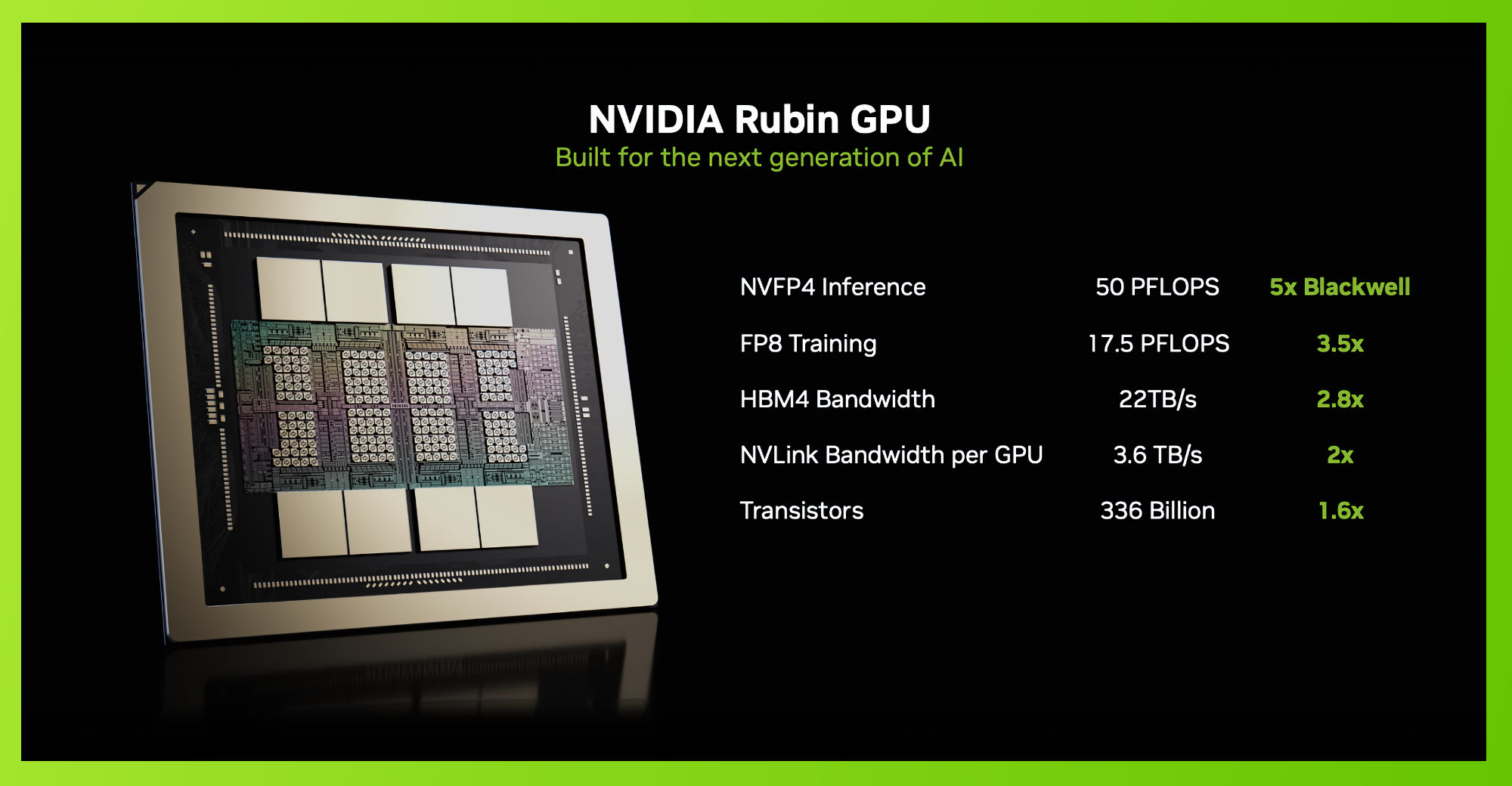
NVIDIA has unveiled its next-generation AI computing platform, Rubin, marking a major shift in how large-scale artificial intelligence systems are designed and deployed. Rather than focusing only on faster GPUs, the Rubin platform emphasizes deep integration between compute and networking, reflecting the reality that modern AI workloads run across thousands of processors working in parallel. By tightly coupling GPUs, CPUs, and high-speed networking components, NVIDIA aims to reduce communication delays that increasingly limit performance in massive AI clusters.
At the core of Rubin is a system-level design philosophy in which networking is no longer a passive data carrier but an active participant in computation. Advanced interconnects, new data-processing units (DPUs), and faster Ethernet and NVLink technologies are intended to handle tasks such as synchronization and data movement more efficiently, freeing GPUs to focus on model training and inference. This approach is expected to significantly lower the cost and energy required to run large language models and other compute-intensive AI applications.
Rubin is also positioned as a foundation for what NVIDIA calls “AI factories”—data centers purpose-built for continuous AI training and deployment. These systems are designed to scale to tens of thousands of GPUs while maintaining predictable performance, a key requirement for cloud providers, research institutions, and enterprises building next-generation AI services. Early ecosystem support from server manufacturers and cloud infrastructure companies suggests that Rubin-based systems could begin appearing in production environments over the next couple of years.
With Rubin, NVIDIA is signaling that the future of AI performance will depend as much on intelligent networking and system co-design as on raw chip speed, setting the direction for the next phase of data-center-scale artificial intelligence.