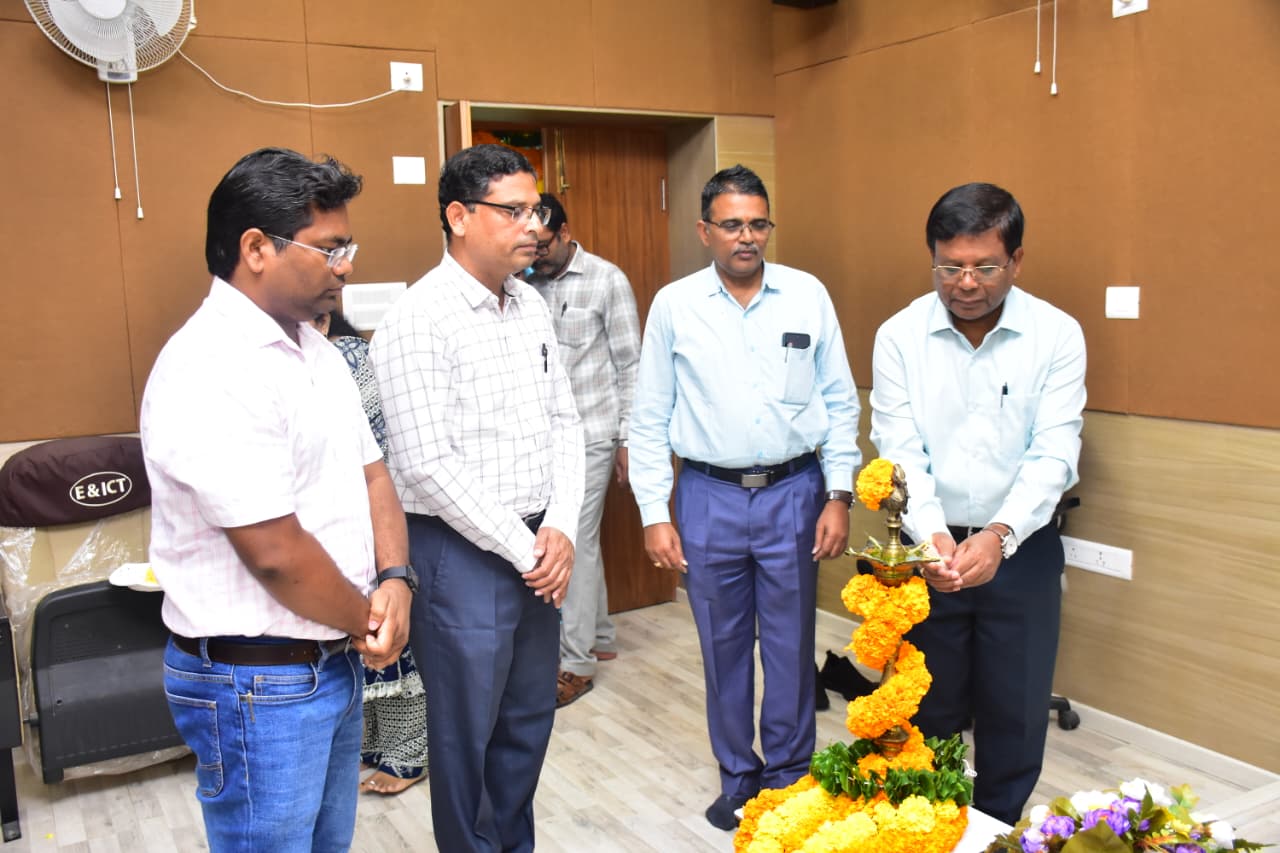
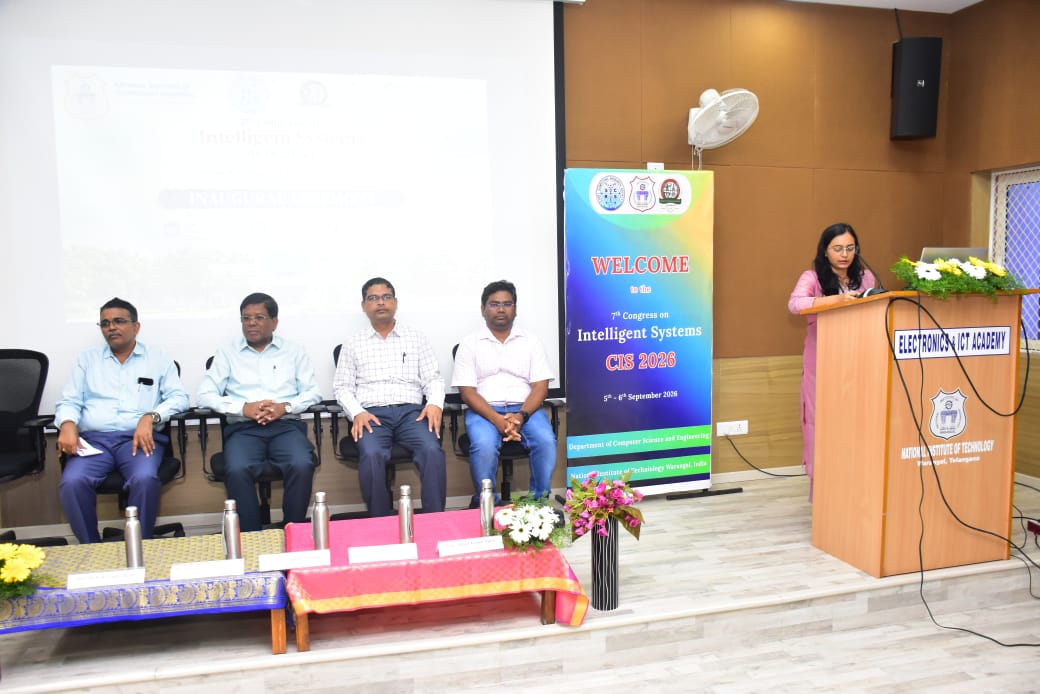
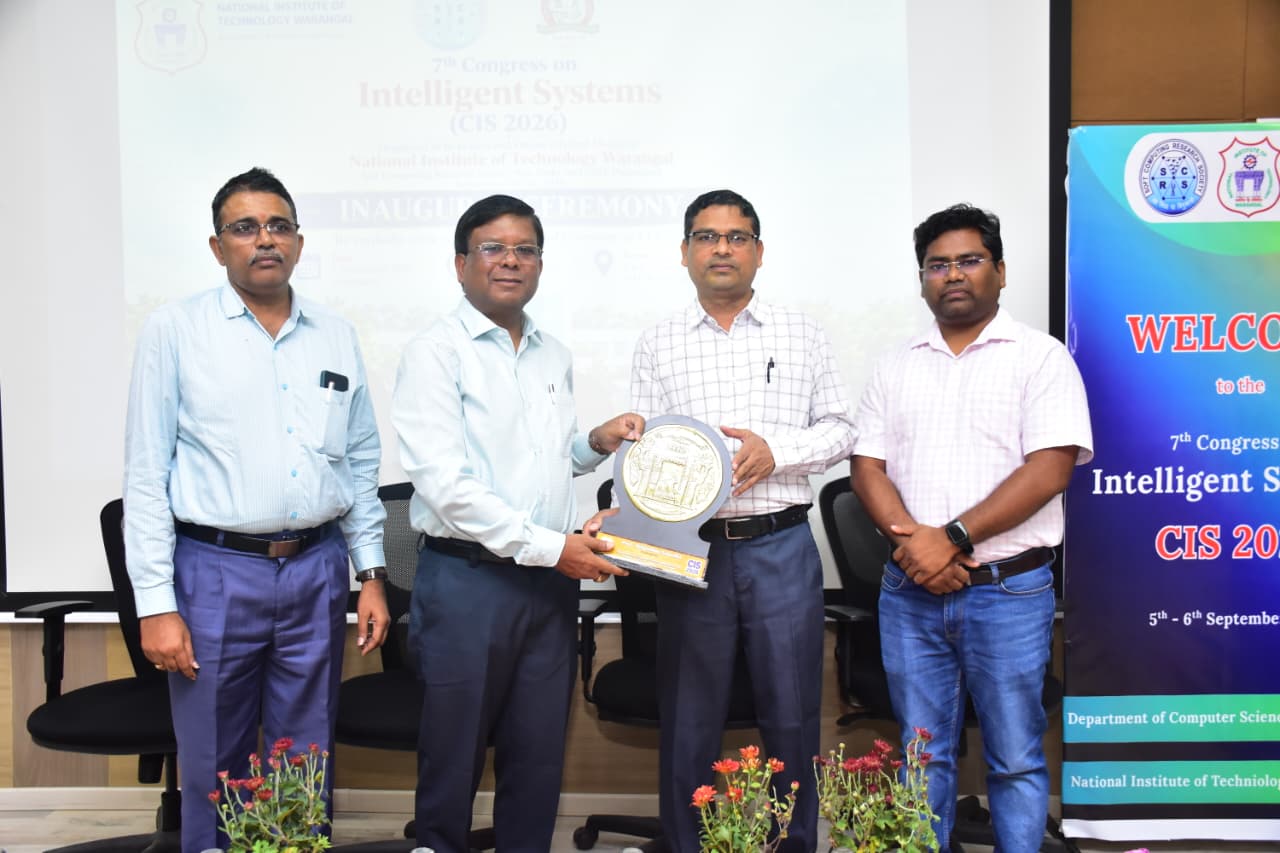
The 7th Congress on Intelligent Systems (CIS 2026) concluded at the National Institute of Technology Warangal (NIT Warangal), bringing together researchers, academicians, technology professionals and industry experts from India and abroad for two days of discussions on the rapidly evolving landscape of artificial intelligence and intelligent computing. Held on September 5 and 6 in hybrid mode, the congress was organized by the Department of Computer Science and Engineering, NIT Warangal, in association with the Soft Computing Research Society (SCRS), New Delhi, and CBIT Hyderabad. The event focused on emerging areas including responsible artificial intelligence, AI-native enterprise systems, cybersecurity, data privacy, sustainable computing, healthcare technologies, pharmaceutical systems and autonomous decision-making. The academic scale of CIS 2026 was reflected in the overwhelming response to its call for research contributions. A total of 1,901 papers were submitted, with 130 papers accepted and registered, giving the congress an acceptance rate of approximately 7 percent. The rigorous review process involved 528 reviewers, while submissions came from 15 countries, namely Bulgaria, China, Fiji, India, Iraq, Nepal, Norway, Oman, Perú, Serbia, Ukraine, the United Kingdom, the United States, Uzbekistan and Viet Nam. The participation highlighted the growing international profile of CIS as a forum for research in intelligent systems. The congress commenced with an inaugural programme attended by Prof. Bidyadhar Subudhi, Director, NIT Warangal and Chief Patron of CIS 2026; Prof. Sonawane Shirish Hari, Dean (Research and Development), NIT Warangal and Patron; Prof. PVR Ravinder Reddy, Vice-Principal, CBIT Hyderabad; Prof. Rashmi Ranjan Rout, Head, Department of Computer Science and Engineering and General Chair, CIS 2026; Prof. Manoj Kumar Patra, Organizing Secretary; Prof. Manjubala Bisi, Organizing Chair; and Prof. Jagdish Chand Bansal, President, SCRS, New Delhi. The inaugural ceremony featured Vande Mataram, Saraswati Vandana and lamp lighting, followed by addresses by the conference leadership and invited dignitaries. The scientific programme featured prominent academic voices as well as experts from leading technology and industry organizations. Prof. Ashok Kumar Das of IIIT Hyderabad and Prof. Siba K. Udgata of the University of Hyderabad delivered plenary addresses, offering perspectives on the advancement of intelligent systems and the broader technological and societal implications of emerging AI technologies. The keynote sessions brought together perspectives from enterprise technology, sustainable computing, healthcare, cybersecurity and responsible AI. Harshavardhan Peddireddy, Platform Architect, Meijer, spoke on “AI-Driven Data Privacy and Sustainable Computing: Architecting a Resilient and Responsible Future,” emphasizing the need to balance computational efficiency with privacy, resilience and responsible technology practices. Muralidharan Lakshmanan, VP, Solution Architect at Synchrony, USA, addressed “The Architecture of Intelligence: Engineering Resilient AI-Native Systems at Enterprise Scale,” examining the architectural challenges involved in moving AI from experimental environments into dependable enterprise deployments. Healthcare and regulated technology formed another significant component of the keynote programme. Snehal Godse of InvaGen Pharmaceuticals Inc. presented “AI in Pharmaceutical Quality Systems: From Automation to Accountability,” focusing on the importance of transparency, accountability and quality assurance when deploying AI in regulated environments. Ramesh Kumar Ramu of Compunnel, Inc. discussed “Building Trustworthy Generative AI: Responsible Governance for Enterprise and Healthcare,” highlighting governance and trust as critical factors in enterprise adoption of generative AI. The programme also addressed the increasingly important relationship between observability, security and privacy. Gaurav Yadav, Senior SoC Design Engineer, Amazon, and Lokeswari Vejju, Independent Researcher, presented “Minimum-Exposure Observability: Balancing Diagnostic Utility, Security, and Privacy,” exploring approaches to obtaining meaningful system visibility while minimizing unnecessary exposure of sensitive information. A series of invited sessions expanded the discussions into human-centred AI, persistent machine intelligence, autonomous agents and software modernization. Tevfik Tolga Kavun, Independent Researcher, spoke on “Human-in-the-Loop AI for Pharmaceutical Field Force Management: From Predictive Signals to Managerial Decisions,” highlighting the continuing importance of human judgement in AI-assisted decision-making. Gopichand Talluri, Senior Software Engineer, Annslo Tech Inc, explored the concept of persistent context through “AI with Memory: Building Systems That Learn from Past Interactions.” Akila Balasubramanian, Software Engineering Technical Leader, Cisco, examined the emergence of more autonomous AI systems in “AI Agents That Investigate, Not Just Predict.” The role of generative AI in software engineering was addressed by Deepika Reddy Odur, Independent Software Developer, through “Modernizing Legacy Java Systems with Generative AI: A Modular Framework.” The presentation highlighted the possibilities of applying generative AI to the modernization of established software systems. Cybersecurity and agentic software architecture were also prominent themes. Kalyana Krishna Kondapalli, CEO, Mytecz and CTO, AiGlo, presented “Adaptive AI-Driven Cybersecurity: From Threat Detection to Predictive and Autonomous Defense,” discussing the movement from conventional reactive security mechanisms towards predictive and autonomous defence. Renjith Ramachandran, Senior Solutions Architect and Independent Researcher, presented “Agentic Architecture Evolution (AAE): Using RAG and Multi-Agent AI to Keep Software Architecture Alive,” focusing on how retrieval-augmented generation and multi-agent approaches can contribute to software architectures that continuously evolve with changing requirements. The technical sessions were chaired by experts representing both industry and research. The session chairs included Snehal Godse of InvaGen Pharmaceuticals Inc.; Lokeswari Vejju, Software Development Engineer; Shalabh Parmar of Qualcomm Inc.; Sai Kiran Taduri, Sr. Software Development Engineer, Amazon; Jegan Shanmugam, Lead Software Engineer; Sivakumar Balu, Senior Engineer, Mercedes-Benz Research & Development of North America; and Akshay Ramachandran of Nvidia. Their role facilitated focused technical discussions and interaction between speakers and participants. Across the two days, CIS 2026 reflected a broader shift in the field of intelligent systems from developing AI models with greater capabilities to designing systems that can operate responsibly, securely and reliably in real-world environments. The discussions connected diverse domains such as sustainable computing, privacy-preserving technologies, enterprise AI, pharmaceutical quality systems, trustworthy generative AI, autonomous agents, cybersecurity and legacy-system modernization. The congress concluded with a strong emphasis on interdisciplinary collaboration and responsible technological advancement. Beyond showcasing new research and technological developments, CIS 2026 highlighted the importance of resilience, accountability, privacy, security and meaningful human involvement in the deployment of intelligent systems. With participation from academia and industry across multiple countries and a highly selective research review process, the congress provided an international platform for exchanging ideas and strengthening collaboration towards the development of trustworthy, sustainable and human-centric intelligent technologies. The post-conference proceedings of CIS 2026 will be published in the SCOPUS-indexed Springer book series Lecture Notes in Networks and Systems, further extending the scholarly contribution of the congress. Photographs of the conference are available at the following Google Drive link: CIS Photographs