.png)
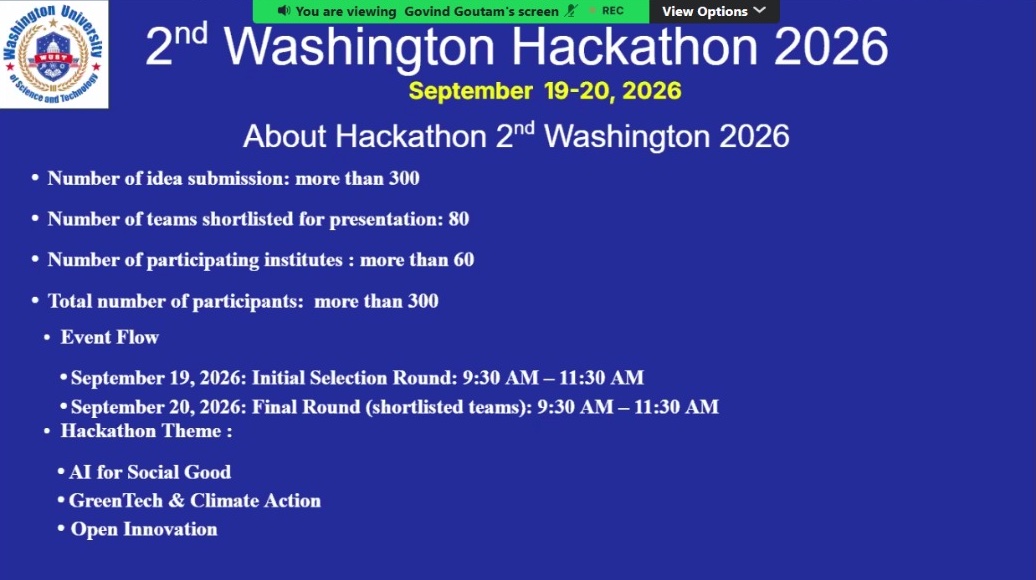
Ideas addressing social challenges, climate concerns and emerging technology applications took centre stage at the 2nd Washington Hackathon 2026, which brought together more than 300 participants representing over 60 institutes.
Organised by the Washington University of Science and Technology (WUST), with The Institution of Engineers and Scientists (The IoES) as technical sponsor, the two-day hackathon was held on September 19 and 20. More than 300 ideas entered the competition, with 80 teams eventually shortlisted to present their solutions to expert panels.
Unlike a conventional academic event, the hackathon was centred on problem-solving, team-based innovation and the conversion of ideas into demonstrable technology solutions. Participants worked on challenges spanning artificial intelligence, healthcare, education, agriculture, sustainability, smart cities, cybersecurity, climate action and financial technology.
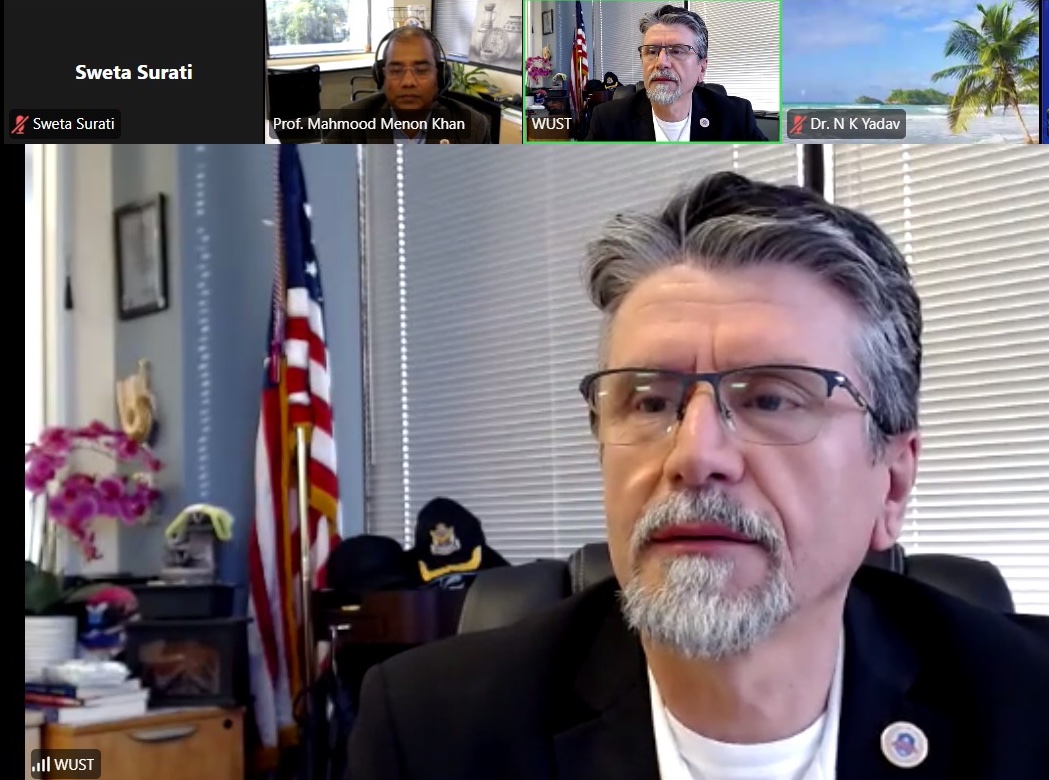
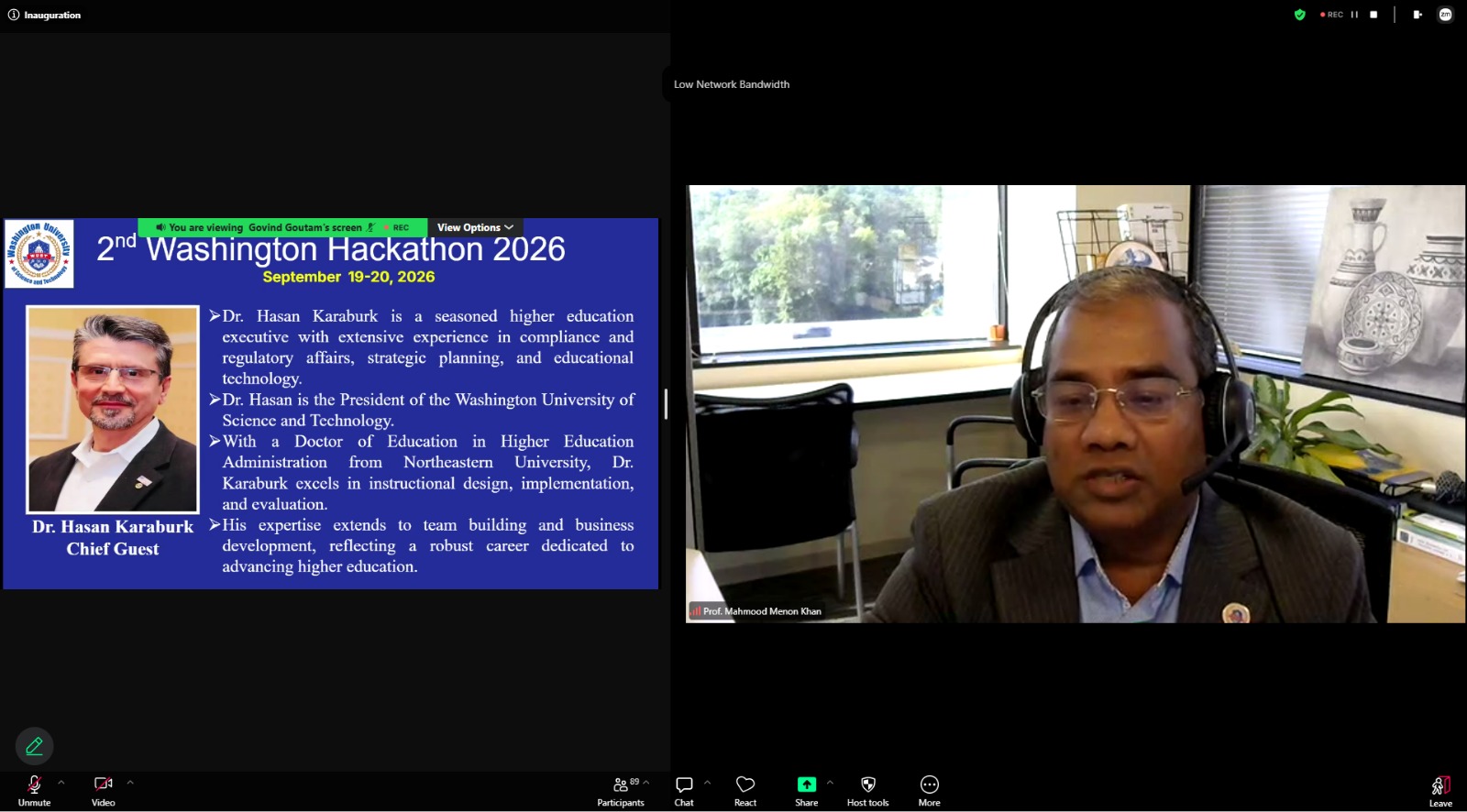
The programme opened with Prof. Touhid Bhuiyan, Convener, welcoming the participants and introducing WUST. Prof. Sandeep Kumar, Co-Convener, outlined the objectives and structure of the competition, while Dr. Hasan Karaburk, President, Washington University of Science and Technology, addressed the gathering as Chief Guest. The opening session was followed by the first stage of team evaluation.
A distinctive aspect of this year's hackathon was the involvement of a large panel of professionals drawn from global technology companies, universities and specialised industry sectors. Rather than using a single jury for all submissions, the organisers distributed the evaluation across the three central challenge areas.
Teams competing under AI for Social Good were evaluated by Ripunjoy Sarkar, Technical Architect Expert; Venkateswara Rao Guntupalli, Senior Sql Database Administrator at Health Resources and Services Administrations, Maryland; Satyanarayana Gopisetty, Senior Cloud & DevOps Architect at Toyota Financial Services Corporation; Maneesh Gupta, Salesforce Architect and Contractor at Eli Lilly; Anjali Mudireddy, Risk Analyst at Amazon, USA; Dilip M. Sharma, Application Analyst at Houston Methodist Hospital; Shreyansh Sharma, Senior Software Developer at London Stock Exchange; Gunjan Pravin Shegade, Performance Engineer at Raks Group; and Bharathi Sesha Sai, Cybersecurity Architect at Leidos Inc.
The GreenTech & Climate Action category brought together another group of judges with expertise in cloud infrastructure, data engineering, software development, sustainability and technology systems. The panel comprised Pratishtha Singh, Software Engineer II, Amazon; Parth Ghaswala, Cloud Infrastructure Advisor, Gainwell Technologies LLC; Soumyajit Mukherjee, Senior Manager, Data Engineering, Shutterfly Inc.; Sudarshan Venkataraman, Principal Software Engineering Manager; Pushpanjali Chauhan, Supply Chain & Operations Analytics Professional, California State University–Fullerton; Shubham Srivastava, Senior Cloud Software Engineer; Ramesh Chandra Aditya Komperla, Senior Software Engineer, GEICO; Tevfik Tolga Kavun, Independent Commercial Leadership Advisor; Sanjay Vijay Mhaskey, Lead Principal Consultant; Sivakumar Balu, Mercedes-Benz Research and Development of North America; Mahesh Shanmugam, Control Systems Engineer; Shyamprasad Sesshagiri, Staff SAP S/4 Analyst at Nvidia; Sarath Kumar Kallayil Sreedharan, Senior Technical Account Manager, Amazon Web Services; Siddhesh Latkar, Senior Software Engineer, Apple; and Venkata Satya Karthik Koganti, Senior DevOps Engineer, Holland America Line.
The Open Innovation category was assessed by Pritesh Gehlot, Senior Architect at Staples; Premkumar Ganesan, Technology Leader at Deloitte; Aneesh Varghese, Senior Technical Account Manager at AWS; Manjeera Chanda, Senior Mulesoft Architect at GoodRx; Chandramouli Viswanathan, Vice President and Senior Lead Architect at JPMorganChase, Delaware; Poli Reddy Basani of SAP America Inc.; Sakthi Sankara Balaji Sathyamurthy, Senior Technology Program Manager at Truist Financial Corporation; Gopichand Talluri of Annslotech Inc.; Sumit Sachdeva, Technical Manager for Predictive Analytics/Business Intelligence at The Scotts Company LLC; Kamana Parvej Mishu, M.S. in Engineering Management (Industrial), Trine University; Sai Krishna Puli, Lead Application Architect/Data Architect; Harsh Jeenesh Banthia, Co-Founder of Avenue Ticketing Inc.; and Rajasekhara Duggimpudi, Software Engineer II at CME Group.
The composition of the panels reflected the wide technological scope of the hackathon, with expertise extending across AI, cloud platforms, cybersecurity, software engineering, data science, DevOps, enterprise architecture, business technology and sustainability. The competition unfolded through successive presentation rounds on September 19 and 20. Shortlisted teams presented their solutions to judges assigned to the respective thematic tracks, giving participants an opportunity to explain their concepts, demonstrate their applications and respond to questions from experienced professionals.
The AI for Social Good category provided a platform for technology solutions aimed at societal needs, while GreenTech & Climate Action brought environmental and sustainability challenges into the innovation process. Open Innovation, meanwhile, allowed participants to pursue solutions across a broader range of emerging technology applications. The diversity of participating institutions also gave the event an interdisciplinary character. Students and innovators could interact with professionals working in different areas of technology and gain exposure to the practical considerations involved in taking a concept from an initial idea towards a demonstrable solution.
The numbers underline the scale of the initiative: more than 300 ideas, 80 shortlisted teams and participants representing more than 60 institutes. The event consequently served not only as a competition but also as a meeting point between emerging innovators and experienced professionals from the global technology ecosystem. The successful completion of the 2nd Washington Hackathon 2026 demonstrated the growing role of hackathon platforms in encouraging collaborative problem-solving and giving young innovators an opportunity to test technology ideas against real-world requirements. The event concluded after two days of presentations and evaluations, with innovation, interdisciplinary collaboration and practical technology solutions remaining at the heart of the programme.
Photographs of this Hackathon are available at the following Google Drive link: Click Here