.png)
The NextGen Hackathon 2026, a
premier global innovation-driven hackathon, was successfully conducted on
August 15–16, 2026. Organized by the ACM Fremont Chapter in the USA, the
intensive two-day event served as a high-impact platform to accelerate
technological breakthroughs, creative thinking, and cross-border teamwork. By
bringing together a diverse ecosystem of students, academic researchers,
professional software developers, and young innovators, the hackathon bridged
the gap between theoretical knowledge and practical engineering.
The Hackathon demonstrated
exceptional global scale, processing a vast influx of over 3,000 project
abstracts and conceptual proposals from 100+ accredited international
institutions. To uphold strict benchmarks of technical excellence, the
organizing committee deployed a comprehensive, multi-tiered peer-review
framework. Every submission underwent rigorous vetting across core criteria,
including architectural innovation, engineering feasibility, horizontal
scalability, and societal impact. Through this selective downsampling process,
the panel curated a highly competitive cohort of 156 finalist teams. The
culminating phase brought together more than 400 registered engineers,
researchers, and developers who collaborated inside a synchronized virtual
environment to transform theoretical designs into production-ready, scalable
tech solutions.
The structural framework of the
Hackathon was architected around 16 distinct thematic tracks. These tracks
functioned as highly controlled, industrial-grade incubation sandboxes designed
to test the operational resilience of next-generation technologies. Curated by
the ACM Fremont Chapter (USA) in collaboration with the Soft Computing Research
Society (SCRS), this rigorous multi-track taxonomy forced competing teams to
move completely past surface-level front-end mockups, static wireframes, and
superficial user interfaces. Instead, the technical parameters mandated the
deployment of production-ready software architectures, zero-trust distributed
network topologies, and high-throughput intelligent data-processing engines
capable of handling concurrent, real-time computational loads.
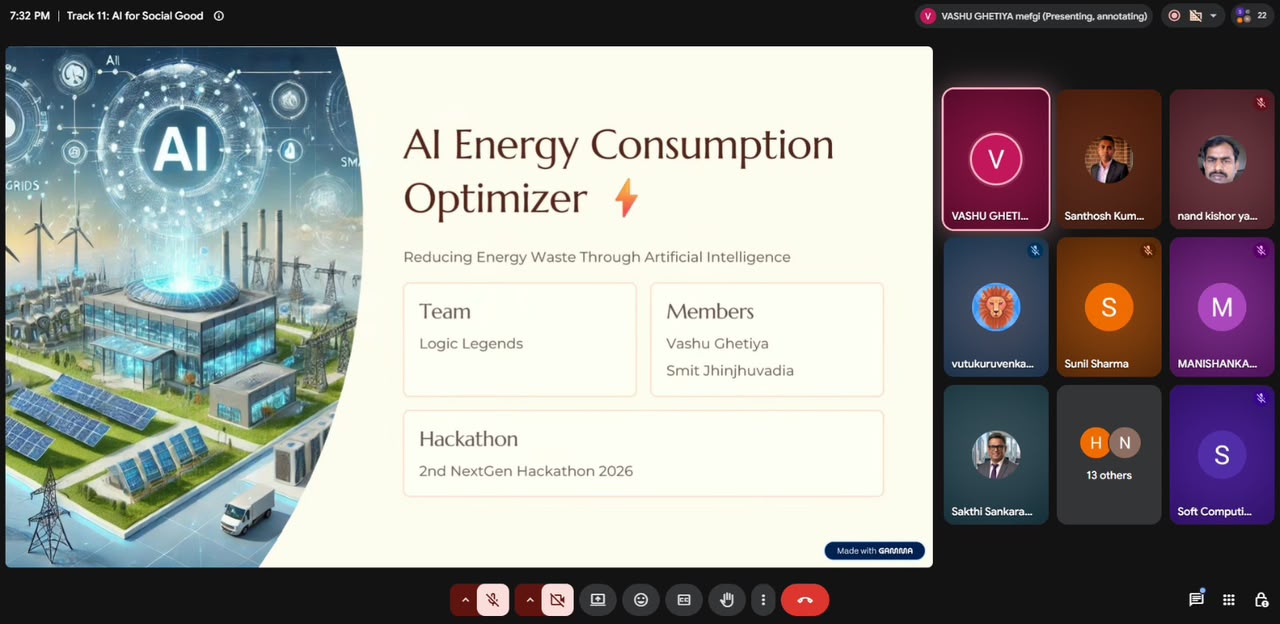
The
track AI for Social Good explored the use of AI and intelligent systems for
driver-fatigue prevention, road safety, transportation compliance, mobility
assistance, and emergency response. This was evaluated by Venkata Phani
Patelkhana (Independent Researcher), Naresh Miriyalu (Visa Inc.), Mohit Kumar
(Mungr Co.), Abhradeep Chatterjee (NTT Data Services), Divya Kodi (AI &
Data Analyst, Truist Bank), Manuj Arora (Senior Solutions Architect, Amazon Web
Services), Rasool Javeed Mohammad (Software Engineer–Solution Architect, Lucid
Technologies Inc.), Purva Joshi (Principal Product Manager, Adobe Inc.),
Munikumar Pindi (KIK Consumer Products), Anil Mandloi (American Express), Uday
Kumar Reddy Gangula (Salesforce), Anjani Kumar Polinati (Cisco Systems),
Santhosh Kumar Balachandran (Salesforce Platform), Sunil Sharma (Ford Motor
Company of Canada), Sakthi Sankara Balaji Sathyamurthy (Senior Technology
Program Manager), Rajesh Kumar Grandhi (Independent Researcher, USA), Ayan
Putatunda (Zendesk), Sarman Aulakh (Chasi AI), Hari Krishna Bethanaboina
(Martin Marietta Materials), Ritwik Verma (eBay), and Poli Reddy Basani (SAP
America Inc.).
In
the Cybersecurity for the Future track, the participants demonstrated how AI
and intelligent analytics can strengthen digital security and protect
individuals and organizations against evolving cyber risks. It was judged by
Akshay Ramachandran (Nvidia), Manish Gupta (Design Laboratory Inc.), Pallavi
Shrivastava (U.S. Bank), Lokeswari Vejju (Independent Researcher), Tarun Kumar
Chatterjee (Presidio, USA), Durga Prasad Dasepalli (Senior Technical Architect,
Cleveland State University alumnus, USA), Kannan Meiappan (Director, Ascendion
Inc.), Karthikeyan Mathappan (Consultant, HCL America Inc.), and Rajyavardhan
Handa (Senior Cybersecurity Engineer).
The
Ethical AI & Responsible Innovation track was evaluated by Romal
Bharatkumar Patel (Soundthinking Inc.), Keval Barvaliya (Tyson Foods),
Devyendar Maganti (Prudential Financial), Manish Uniyal (Independent
Researcher), and Kumar Kasimala (Salesforce).
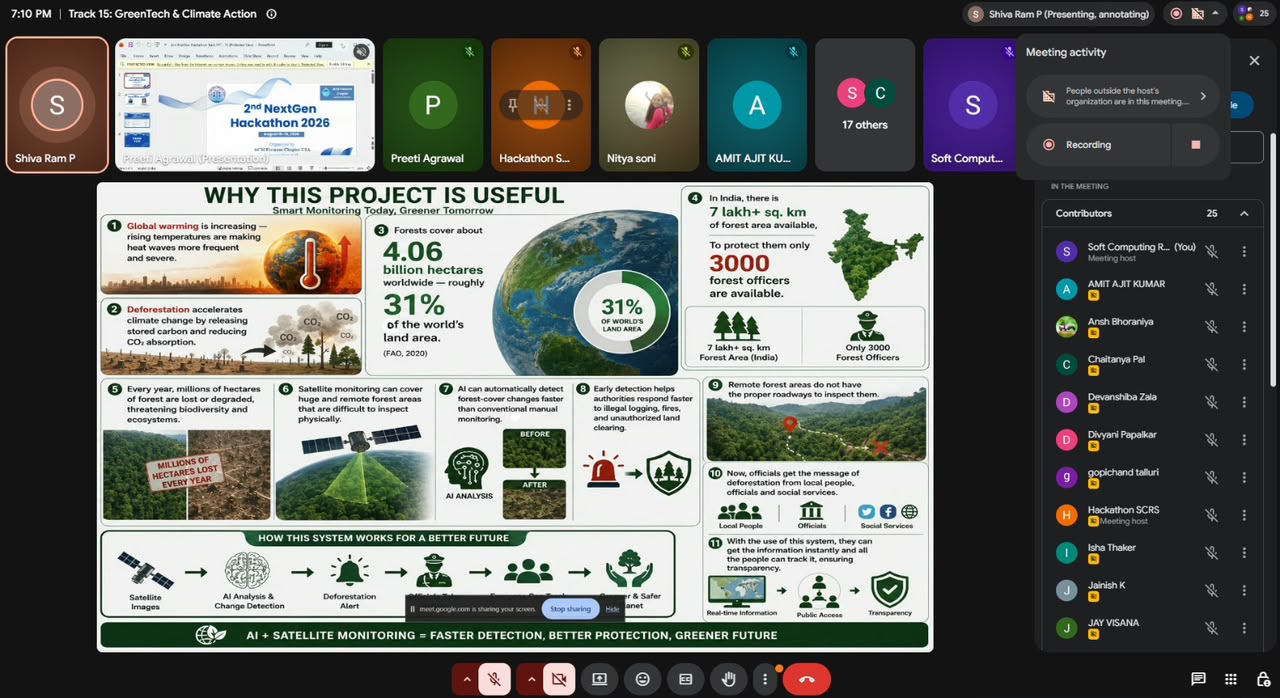
The
GreenTech & Climate Action sessions demonstrated strong interest in
environmental sustainability. It was evaluated by Madhav Narayan Bhat
(Qualcomm), Suchitra Maneesh Suvarna (SAP Ariba), Pon Murugesh Devendren
(Deloitte), Anurag Dani (Carnegie Mellon University), Venkatesh Dondapati (TD
Securities), and Gopichand Talluri (Annslo Tech Inc.).
The
HealthTech & Bio-Innovation track featured solutions addressing preventive
healthcare, digital OPD management, affordable drug discovery, and personalized
healthcare. Judges included Sujith Vadakkepati (Oracle America Inc.), Vijay
Prasad Javvadi (Verisk), Jegan Shanmugam, Murali Srisudha Karri (Infinite
Computer Solutions), Muhammad Zeeshan (University of Gujarat), Kartheek Babu
Kolla (Cohesity), and Sanjeev Bhatia (Southern New Hampshire University).
The
Next-Gen IoT & Smart Cities track explored AI-enabled urban command
systems, emergency response, and intelligent city services. The session was judged
by Premkumar Ganesan (Deloitte), Gowrishankar G. P. Chaganti (Independent
Researcher), Sarvesh Kumar Gupta (Oracle), and Bhargava Chowdary Musunuru
(Fidelity Investments).
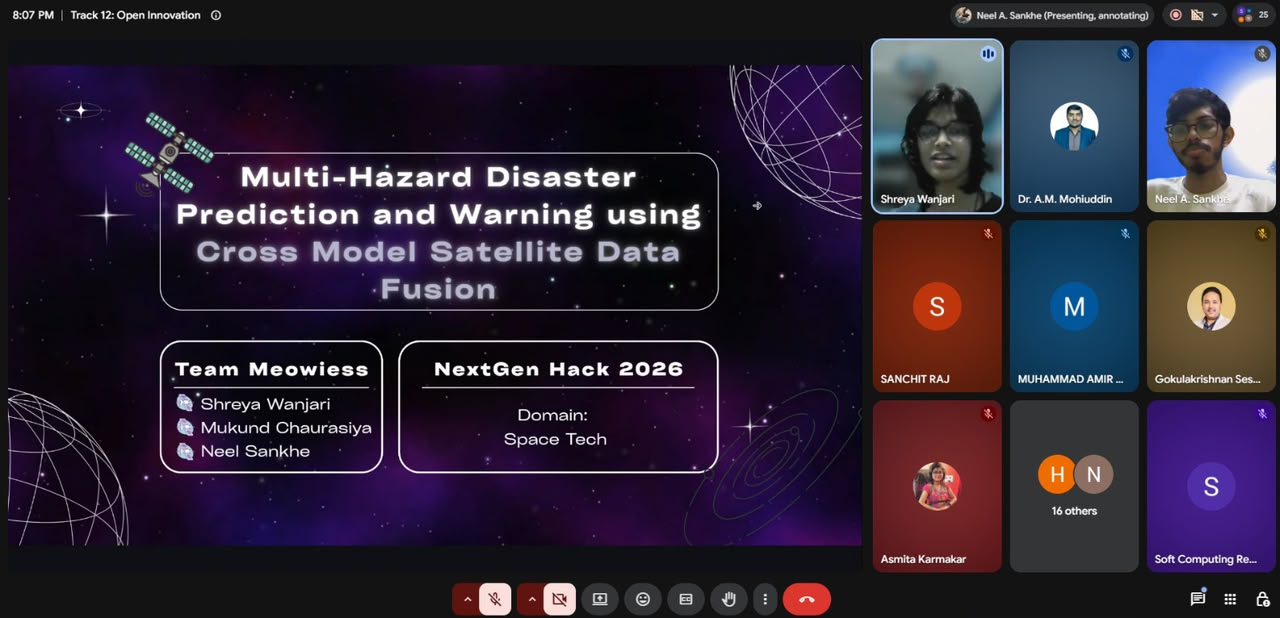
The
Open Innovation track provided teams with the freedom to work beyond predefined
technology themes and was judged by Gokulakrishnan Seshiah (HCLTECH), RaviRaj
Mulasa (Medidata Solutions), Ramesh Krishna Mahimalur (CNET Global Solutions
Inc.), and Dr. Muhammad Amir Quraishi (LAUKOA).
The event successfully integrated
extensive corporate and enterprise-level engagement, highlighted by expert-led
technical masterclasses and interactive engineering clinics. A specialized
technical jury panel comprising veteran software architects, venture
capitalists, and data scientists from leading global tech organizations critically
evaluated the participants' code repositories. The panel provided teams with
real-time feedback on enterprise-grade scaling, product incubation pipelines,
and the deployment of advanced software architectures to solve complex,
real-world industry challenges.
By gathering global technical
talent and diverse academic skill sets into a single workspace, it successfully
built a thriving hub for creative thinking, engineering mastery, and shared
growth. The event did more than just help participants sharpen their core
programming skills and problem-solving techniques. It opened immediate paths to
high-level professional mentorship, global industry networks, and
enterprise-grade development methods. This competition ultimately serves as a
benchmark, proving that international hackathons are essential spaces for
shaping tomorrow's tech leaders and encouraging collaborative teamwork to build
smart, green tech solutions for the future.